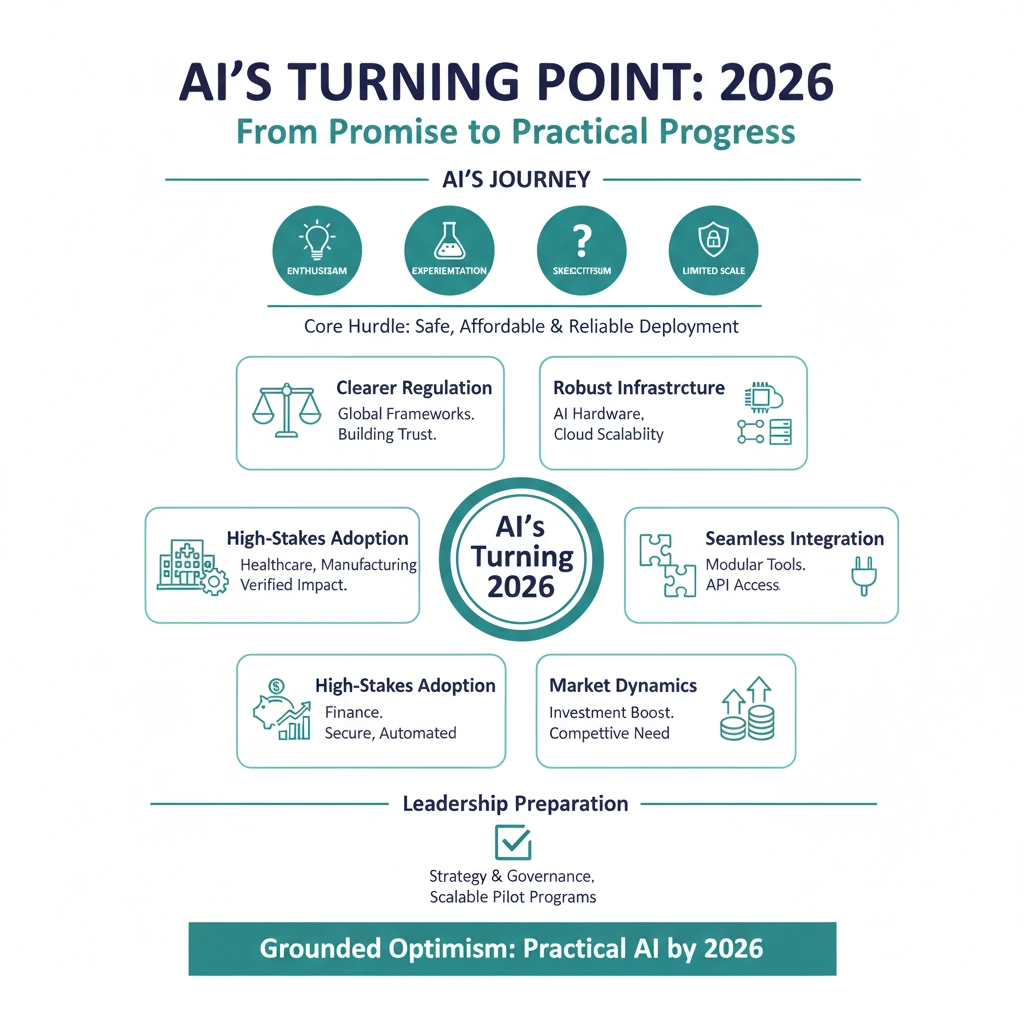
Artificial intelligence has moved through waves of enthusiasm, experimentation, and skepticism. Many organisations have tested AI in small pockets of their operations, yet few have managed to translate that potential into wide scale impact. The challenge has never been a lack of ambition. The real hurdle has been deploying AI safely, affordably, and consistently in environments that demand reliability.
Now, the landscape is shifting. Several long awaited developments are converging at the same time, positioning 2026 as a possible breakthrough year. Regulations are becoming clearer, infrastructure is maturing, and industries that once approached AI cautiously are beginning to show early, measurable results. Together, these shifts suggest that AI is finally moving from promise to practical progress.
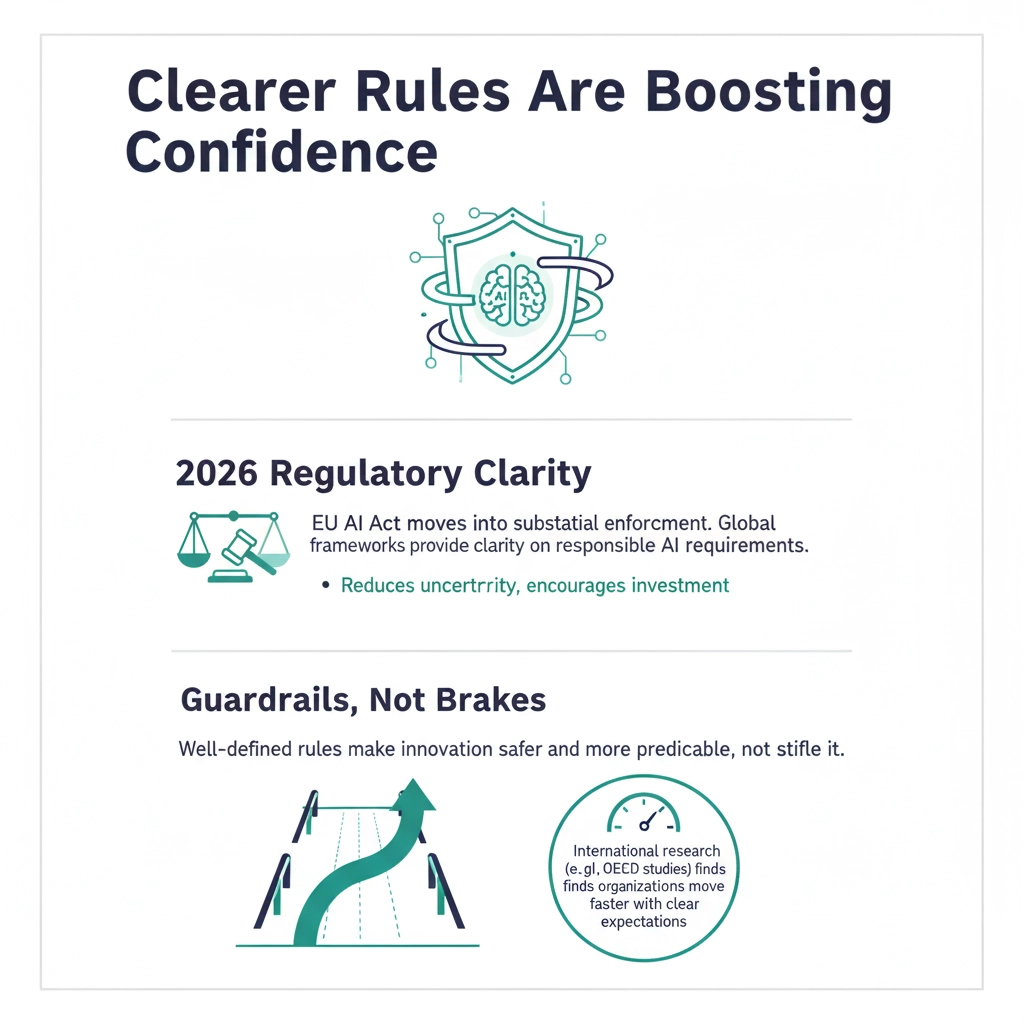
One of the biggest changes shaping 2026 is the emergence of clearer global regulatory frameworks. The European Union’s AI Act, which began rolling out in 2024, enters more substantial enforcement stages by 2026. This gives companies a firmer understanding of what responsible AI adoption requires, reducing the uncertainty that previously slowed investment.
Well defined rules often have the opposite effect of what people fear. Instead of stifling innovation, they provide guardrails that make innovation safer and more predictable. Research from groups such as the OECD points to a recurring pattern: when expectations are clear, organisations move faster because the risks are easier to manage.
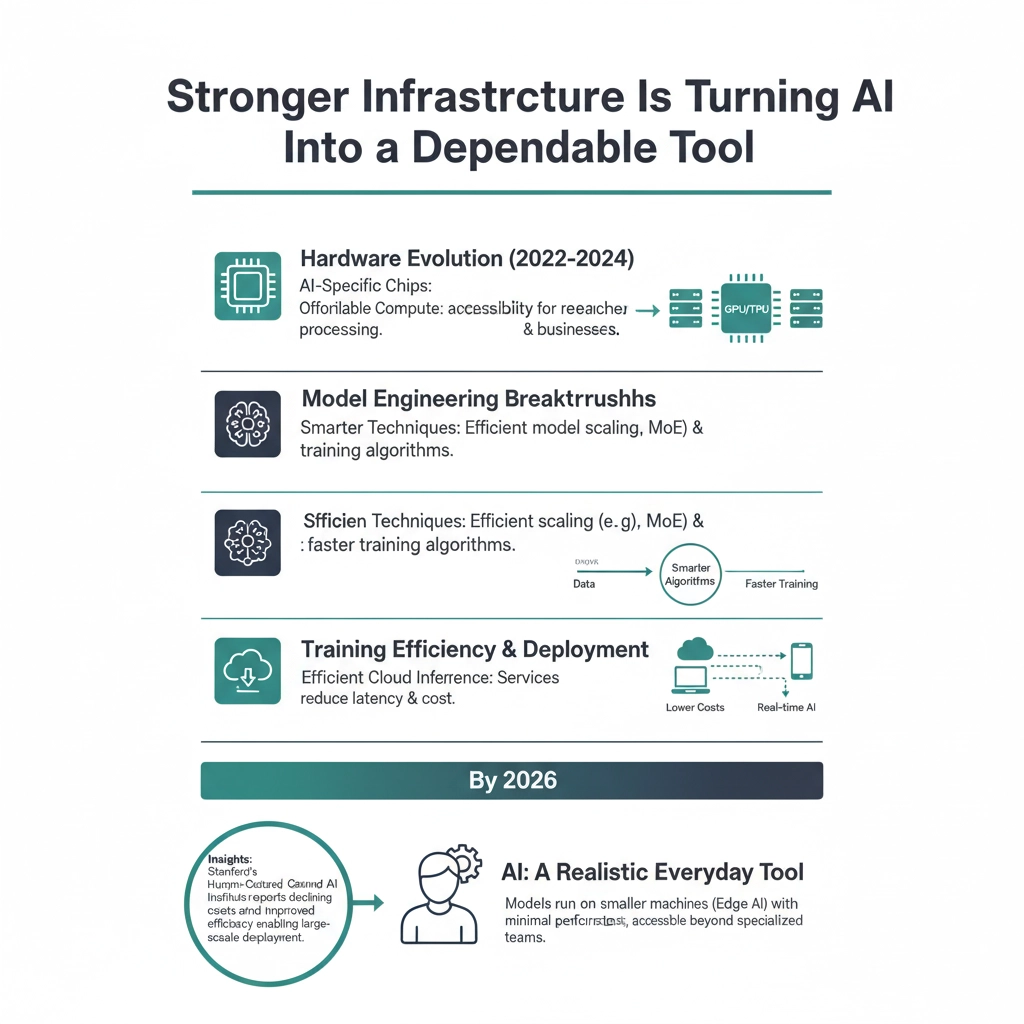
AI’s momentum over the past two years owes a lot to improvements in hardware, model engineering, and the efficiency of training methods. Chips designed specifically for AI workloads, more affordable computing power, and smarter techniques for scaling models allow businesses to run sophisticated systems without breaking budgets.
By 2026, these improvements are expected to reach a point where AI becomes a realistic everyday tool rather than something reserved for specialised teams. Cloud providers continue to roll out efficient inference services, and developers are releasing models that run on smaller machines without dramatic performance trade-offs. Insights from research institutions, including Stanford’s Human-Centered AI Institute, highlight how these advancements are making large scale AI deployment far more achievable.
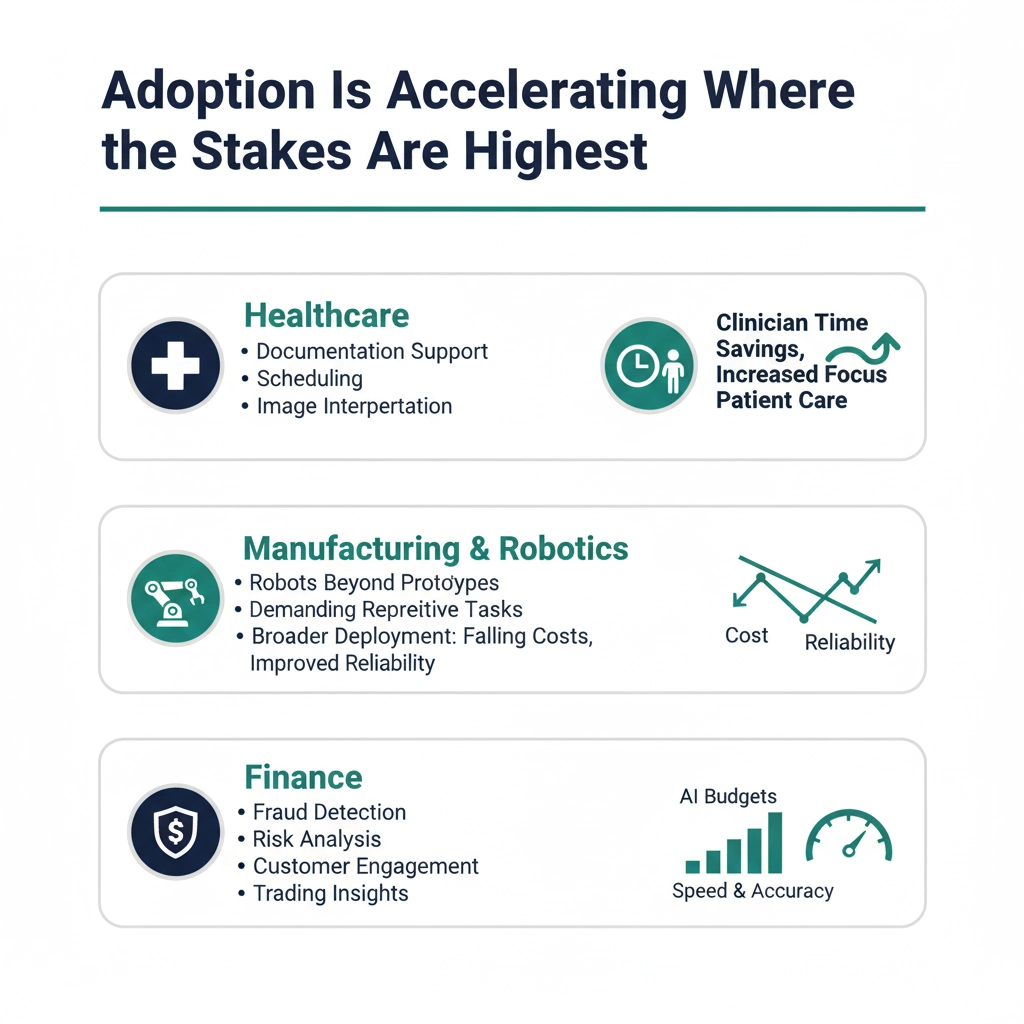
Some of the clearest signs of progress come from sectors that traditionally move cautiously because of safety, accuracy, or regulatory concerns.
Hospitals are beginning to rely on AI for tasks such as documentation support, scheduling, and image interpretation. Early results from organisations like the Mayo Clinic show meaningful time savings for clinicians, which frees them to focus on patient care. Adoption is growing because the tools address real bottlenecks rather than hypothetical ones.
Robotics demonstrations in Tokyo and other innovation hubs show how far AI driven automation has come. Robots capable of handling demanding, repetitive tasks are no longer prototypes. Manufacturers are preparing for broader deployment as costs decrease and capabilities become more dependable.
Banks and investment firms have embraced AI for fraud detection, risk analysis, customer engagement, and trading insights. Reports from Reuters and the Financial Times note that financial institutions are increasing AI budgets because the technology delivers operational speed and accuracy at a level that human teams alone cannot match.
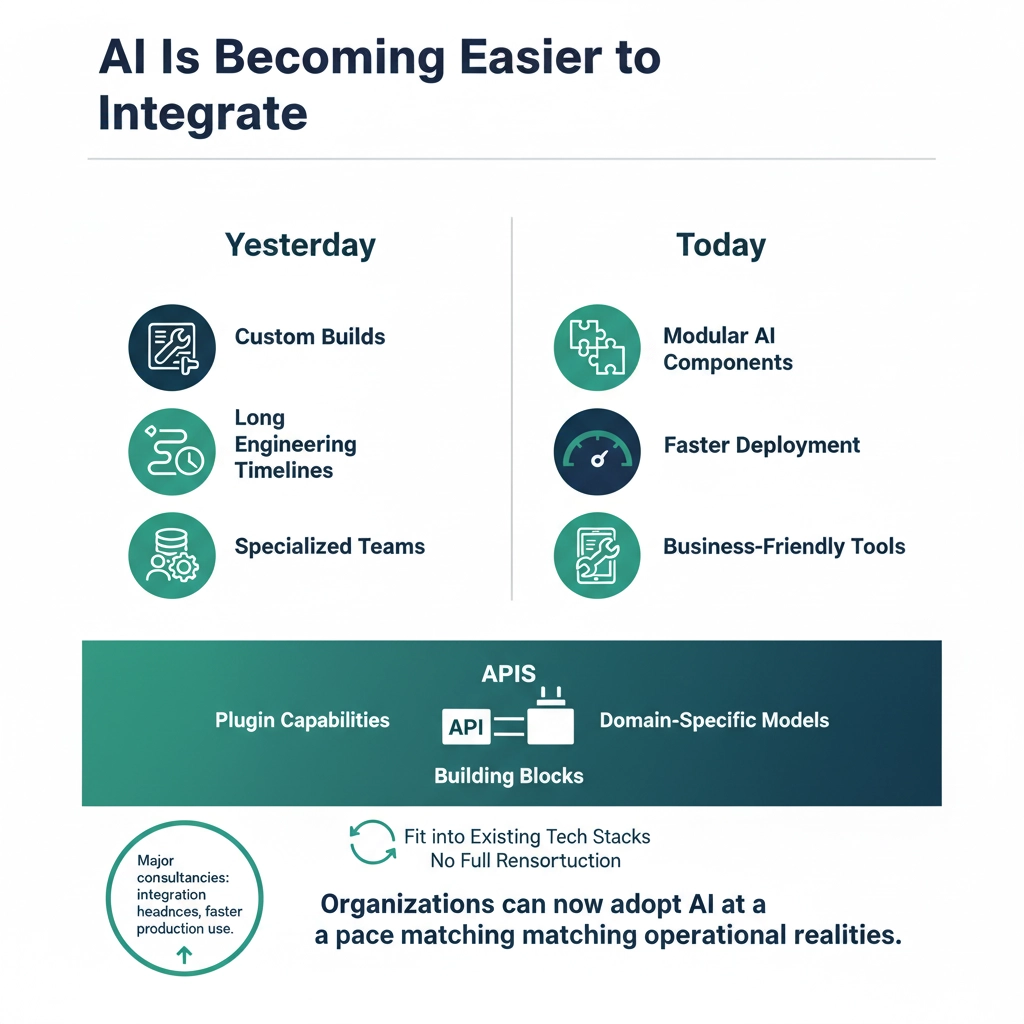
Not long ago, integrating AI into day to day workflows required custom builds, long engineering timelines, and specialised teams. Today, that is changing. Modern AI tools are designed as modular components, making deployment simpler and faster.
APIs, plug in capabilities, and domain specific models let businesses incorporate AI without reconstructing their entire tech stack. Consultancies such as Deloitte and McKinsey have pointed out that this shift in design reduces integration headaches and speeds up production use. Organisations can now adopt AI at a pace that matches their operational realities rather than their technical limitations.
Book your 30 minutes free consultation with our research experts
Investment in AI is rising rapidly across technology, telecom, manufacturing, and finance. Data centres are expanding, talent pools are growing, and companies are competing to build smarter, more automated operations.
Customers and end users are also raising expectations. Faster responses, personalised services, and seamless digital experiences are becoming standard. Organisations that fail to adopt AI risk falling behind those that move early and refine quickly. This combination of internal and external pressure makes 2026 a natural inflection point for the shift from experimentation to execution.
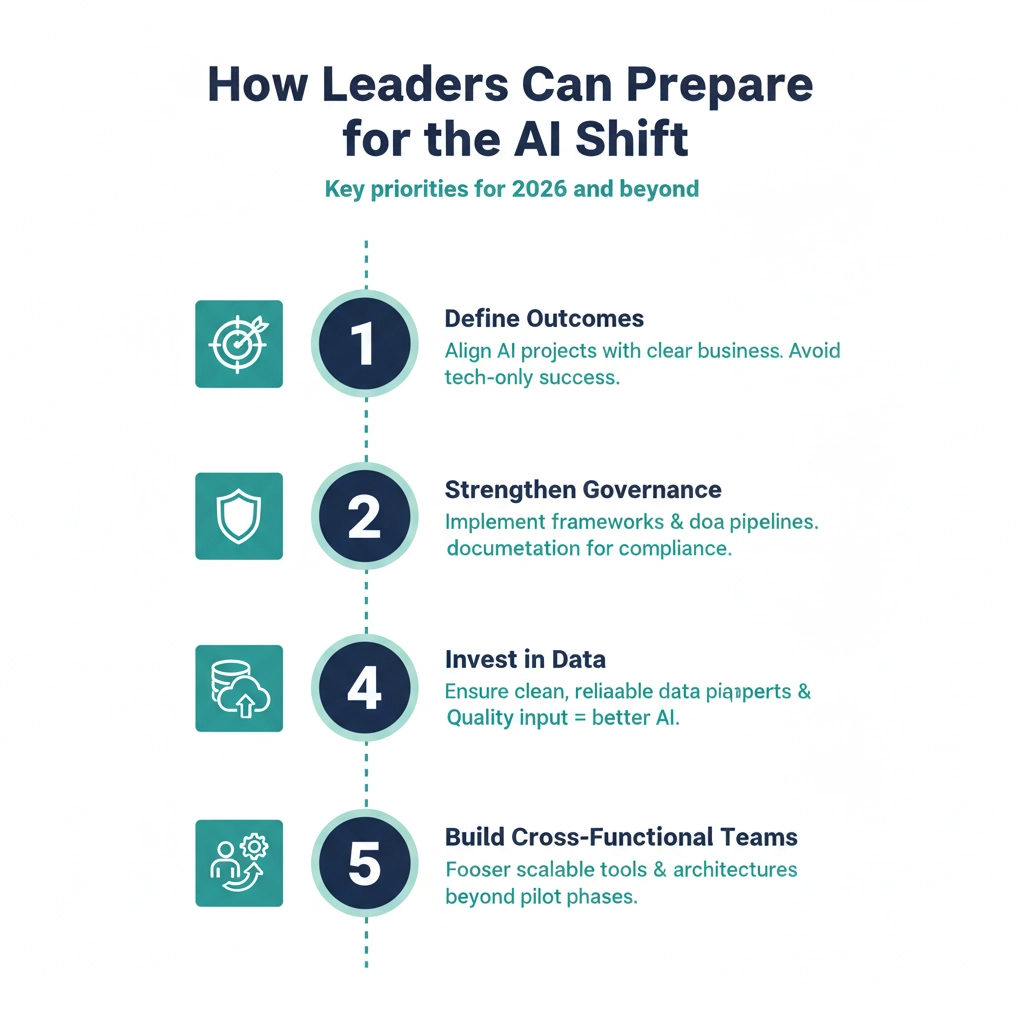
If 2026 does become the year where AI’s long promised impact becomes widespread, organisations can position themselves well by focusing on a few key priorities:
The narrative around AI is maturing. It is no longer only about what extraordinary things might be possible someday. It is increasingly about what is already working, what is reliable, and what is ready to scale.
By 2026, the alignment of regulation, infrastructure, investment, and real world results may finally narrow the long standing gap between AI’s promise and its practical impact. Organisations that prepare thoughtfully will be well positioned to turn this moment into tangible, lasting value.
Learn more about our custom research services